THEMIS HR Dashboard: Visual Intelligence for Comprehensive Talent Management
A comprehensive command center to monitor talent, performance, and key workforce metrics, transforming complex personnel data into agile, strategic decisions.
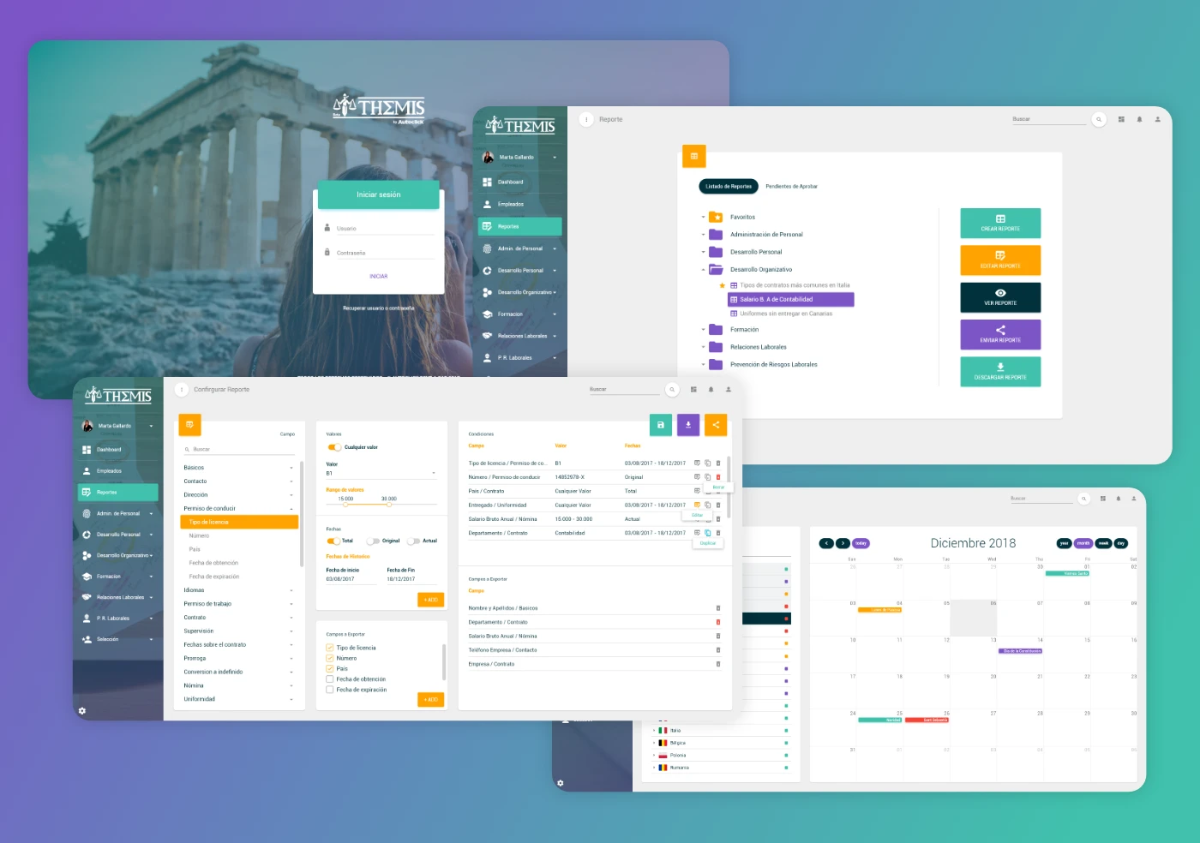
The creation process that unites branding (strategy and brand identity) with product design (UI/UX, information architecture, and user experience) is a fascinating journey where the abstract essence of a brand is transformed into a tangible, functional, and memorable digital tool.
Taking complex enterprise projects and dashboards as a reference, this process is typically structured into 5 key phases:
1. Research, Discovery & Strategy
Before designing a single pixel or choosing a color, it is essential to understand the "why" and the "for whom."
Audit & Benchmarking: Analyzing the market, competitors, and existing solutions to identify gaps and opportunities.
Target Audience Definition (Personas): Creating user profiles (in this case, HR professionals, executives, or employees) to understand their pain points, needs, and daily workflows.
Value Proposition: Defining what makes the project unique and what critical problem it solves.
2. Naming & Brand Identity (Branding)
This is the birth of the product’s personality. Here, we define what it will be called, how it will communicate, and what it will convey.
Naming: Creating a memorable, pronounceable, and available name (such as Themis, inspired by the mythology of justice, order, and equity).
Verbal Identity: Defining the brand's tone of voice (approachable, corporate, technical, or disruptive).
Visual Identity (Brand System):
Designing the logo and its responsive variants.
Establishing a corporate color palette that conveys trust, order, and professionalism.
Selecting typography and creating comprehensive Brand Guidelines.
3. Information Architecture & UX (Product Design)
This is the architectural blueprint of the application, translating brand strategy into logical flows and navigable structures.
User Flows: Mapping every step the user will take within the platform (e.g., from landing on the dashboard to approving a hire or reviewing performance).
Wireframing: Low-fidelity sketches (black and white skeletons) to structure information hierarchy, modular cards, and navigation menus without aesthetic distractions.
4. UI Design & Prototyping
The visual magic: the exact moment when branding and product design merge.
Applying the Design System: Pouring the visual identity created during the branding phase (colors, typography, button styles, icons) over the wireframes to bring them to life.
User Interface (UI) Design: Crafting clean, attractive, and functional dashboards, prioritizing the readability of complex data (charts, tables, turnover or performance metrics) while reducing eye strain.
Responsive Design: Adapting layouts across multiple devices (desktop, tablets, mobile).
Interactive Prototyping: Building high-fidelity prototypes (in tools like Figma) that simulate the real user experience with transitions, loading states, and functional clicks.
5. Validation, Iteration & Handoff
The quality control phase before the product goes to development.
User Testing: Usability testing to verify whether the design is intuitive and if users can complete tasks frictionlessly.
Iteration: Refining based on real user feedback.
Developer Handoff: Preparing design documentation, exporting assets (design tokens, spacing, and specifications), and delivering clean files to frontend developers to ensure the final product is 100% faithful to the conceptual and brand design.